
Free Visual Mold Inspection
Top Mold Inspection & Testing Company in West Valley City
A musty room, a cooler leak or a damp area beneath a manufactured home needs a building-specific inspection. Tell us where the symptom appears and what equipment or plumbing sits nearby.
Start with the evidence
A cooler leak: what to document before sampling
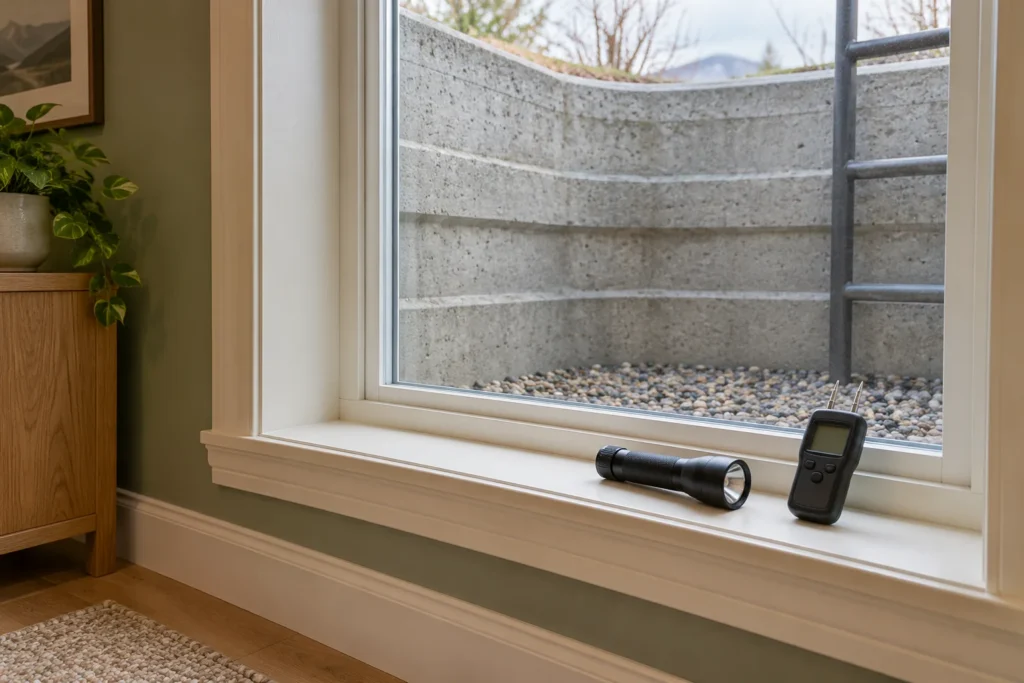
Above and below
If your home has an accessible under-floor area, include its condition in the conversation. A moisture issue below the living floor may need a different access plan from a bathroom surface patch.
Follow the cooler water
Where an evaporative cooler is present, note wet ceiling edges, supply-line leaks or changes while it runs. Those are inspection clues, not a diagnosis from the type of equipment alone.
Use the right utility
West Valley City lists several water and sewer districts. Keep your property’s actual provider details with a leak report rather than assuming the city supplies every connection.
More detail for your visit
How a West Valley inspection unfolds
Most visits follow the same four steps, scaled to your home and your question.
Start with your question
We ask what prompted the call: a smell, a stain, a purchase deadline or a move-out. That decides which rooms we spend time in and whether sampling is even worth discussing.
Map moisture room by room
We use measurements on accessible walls and other material, with thermal images guiding checks of unusual surface temperatures. Cooler-related areas and under-floor access are included only as agreed; the image does not reveal concealed mold.
Sample only where it helps
If a lab result will change what you do next, we take air or surface samples and send them for analysis. If the answer is already obvious, we'll say so.
Walk you through the report
You get a written report with readings, photos and findings in plain language. We explain what needs attention, what can wait, and what the accessible evidence supports and what remains uncertain.
Local context and work detail
Check the equipment actually present
If your West Valley City home uses an evaporative cooler, tell us about supply-line leaks, damp ceiling edges or changes while the unit runs. Direct evaporative cooling introduces water vapor, but the equipment type alone does not establish a mold problem. A refrigerated system has different components and water routes.
An accessible under-floor area or manufactured-home belly wrap needs a different access plan from a bathroom wall. We discuss the spaces to be included before the visit, without asking you to cut barriers or open finishes.
Testing when it helps, not by default
An odor, an unexplained stain or a documentation need can justify an inspection. We begin with accessible observations and moisture measurements, then explain whether a sample would add information. Visible mold often does not need species testing to decide that cleanup and moisture correction are necessary.
Room humidity can add context, but a high reading is not a mold diagnosis. The report explains where readings were taken and what observations support the recommendation.
Choose the right next step
Different evidence, different decisions
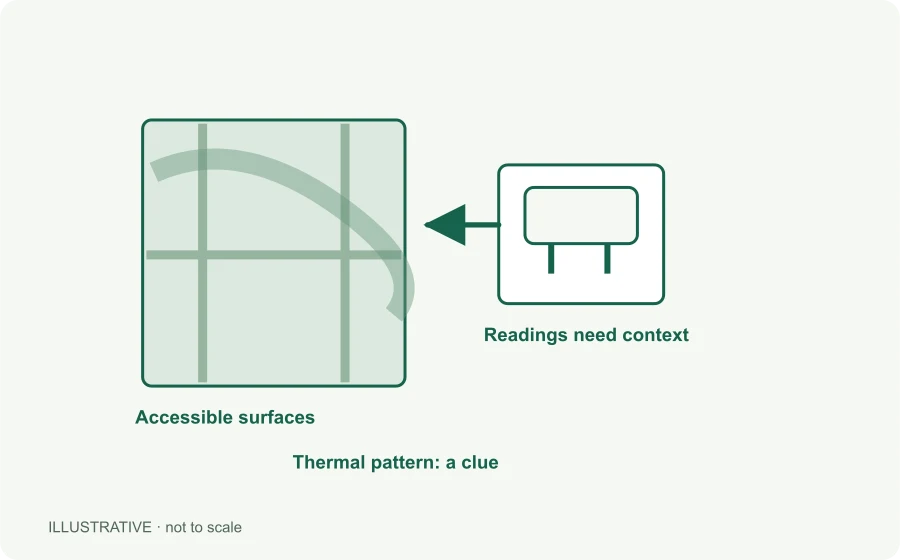
- Accessible surfaces
- Readings need context
- Thermal pattern: a clue
Assessment first
- Trace the symptom
- Visual evidence and moisture measurements help narrow the source before a sampling plan is proposed.
- Visible growth
- A clearly visible patch often makes species testing unnecessary for deciding that moisture and growth need attention.
Samples when useful
- Hidden question
- Discuss whether an air or surface sample would clarify an inaccessible or uncertain condition.
- Report the context
- An outside lab can analyze a sample; the inspection report still needs the locations, observations and limitations.
Local context and work detail
Buying, selling or renting
A buyer reviewing a split-level and a landlord turning over a townhome may need different areas checked and different access arrangements. Tell us whether the purpose is a purchase, a leak investigation or a dated condition record.
We serve Granger, Hunter, Chesterfield, Redwood and neighborhoods across West Valley City. If a public supply or sewer issue is involved, keep your actual utility-provider details with the report; the city lists several providers.
What we use besides samples
A moisture meter assesses accessible material. A thermal camera shows surface temperature patterns that may suggest where to investigate; it does not see mold or directly prove that material behind a finish is wet.
We combine the tools with the water history and visual findings.
Before we arrive
Make the inspection useful
Identify the water provider
Bring the utility or district name if a supply or sewer issue is involved.
Photograph intermittent water
A dated photo can preserve evidence of a leak that stops before the visit.
Keep barriers intact
Do not cut a manufactured-home belly wrap or a finished wall solely to reveal a suspected problem.
More detail for your visit
Match the visit to your part of the home
A lower-level window well, an upstairs shared ceiling and a cooler-related stain need different questions. Give us the precise room and, if possible, a dated photograph of the intermittent condition.
Arrange access to adjoining spaces that you control and disclose any spaces that require an owner or manager. The final record should make it clear which areas were checked.
- Lower-level concern: identify the wall, window well or plumbing route.
- Attached unit: arrange permission for any adjoining area needed.
- Attic or cooler concern: discuss safe access before the appointment.
A scoped visit
From question to written findings
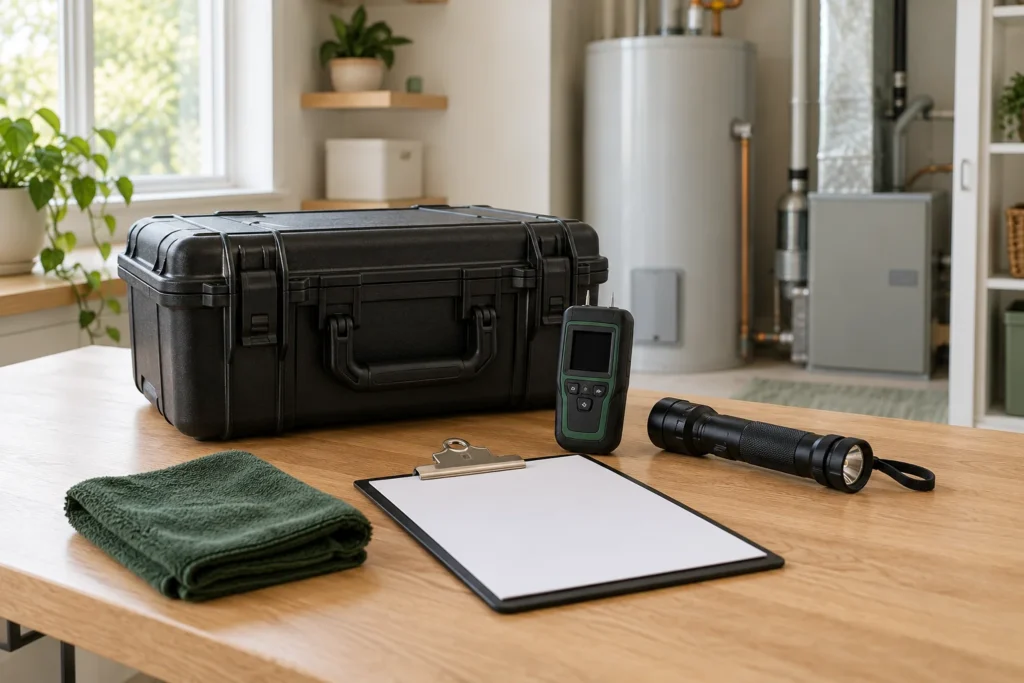
Agree the access
Identify the living spaces, cooler-related areas and any underbelly access before the appointment.
Inspect without guessing
We combine accessible observations with measurements rather than declaring the whole house affected.
Put findings in writing
Keep the report for a repair discussion, purchase decision or conversation with your landlord.
Testimonials
What Our Customers Say
Don't just take our word for it. See what Utah homeowners say about Green Home Air.


Questions before you book
Answers for your next step
Can a swamp cooler really cause a mold problem worth testing for?
A leaking cooler line or wet material near a cooler can merit inspection. A direct evaporative cooler adds moisture to the air, but the type of equipment alone does not establish mold or a need for samples. Tell us where the symptom appears and how it relates to operation. We assess accessible conditions, then explain whether testing adds useful information.
What's actually in the report you give me?
Your report documents every area we inspected, moisture-meter readings, and photographs of any concerns. If we took samples, it includes the lab's identification of the mold types found and their concentrations, with air results compared against an outdoor baseline. We finish with plain-language recommendations so you can decide on cleanup or moisture repairs with confidence.
What affects the cost of a mold inspection in West Valley City?
Mostly the size of the home, how many areas need a close look, and whether lab samples make sense. A single-level 1990s house with one suspect bathroom is a shorter visit than a 1970s split-level with a finished lower level, or a manufactured home where we need to check underneath.
We'll explain the scope before we start, including when we think sampling isn't needed.
When is the best time to schedule mold testing in a West Valley home?
Schedule when the concern appears, or early enough for your purchase deadline and any laboratory turnaround. Give us normal-operation and recent cleaning or painting details, and follow the preparation instructions for the agreed sampling plan. There is no universal late-winter testing requirement, and a current leak should not wait for a season.
Will a mold inspection help with paperwork for a Utah home sale or insurance claim?
It can give you a written, dated record of what was found and where, which is useful when talking with an agent, a buyer or an insurer. What any policy covers, or what you need to disclose in a sale, depends on your policy and your contract, so check with your insurer or real estate professional.
We stick to documenting conditions, not giving legal advice.
Will the Salt Lake County Health Department test my West Valley apartment for mold?
Its housing complaint page says it generally responds to mold only when it results from an active water leak that the occupant didn't cause, such as a roof or plumbing leak. It doesn't describe offering mold testing. Tenants can report active leaks through the county's online form.
An inspection can give you and your landlord a clear record of moisture and visible growth.
Should I get a manufactured home in West Valley City inspected for mold before buying?
We can inspect a manufactured home, with attention to accessible under-floor plumbing, subfloor and water-entry concerns as well as the living space. Access can be limited by the belly wrap or tight spaces, so discuss that before booking. Do not cut the barrier to prepare for our visit. The report explains any material we could not assess.
I can already see mold in my West Valley bathroom. Do I still need testing?
Probably not. The EPA says that in most cases, if mold is visible, sampling is unnecessary. What helps more is finding out why it's growing, whether that's a weak exhaust fan, a slow leak behind tile, or condensation on an exterior wall. We can check moisture around the area and tell you whether it's surface growth or something bigger.
Get In Touch
Ready to Breathe Easier?
Schedule your free mold inspection today. Our team is standing by to help protect your home and family.
24/7 Emergency Line
Email Us
Service Area
West Valley City & Surrounding Areas
Business Hours
Mon-Sat 8am-7pm | 24/7 Emergency
Free Inspection Request
Fill out the form and our team will reach out to you promptly.
Find the right next step
More help for your home
Mold Removal & Remediation In West Valley City
See how assessment, affected materials, containment and drying shape the work.
Explore this service
Whole Home Air Purification In West Valley City
Compare filtration and coil UV-C, with equipment fit and maintenance explained.
Explore this service
Air Duct Cleaning In West Valley City
Compare whole-system cleaning, access needs and when a visit makes sense.
Explore this serviceExplore service information by city
 Salt Lake CityMold Inspection & Testing In Salt Lake City
 West JordanMold Inspection & Testing In West Jordan
 ProvoMold Inspection & Testing In Provo
 SandyMold Inspection & Testing In Sandy
 South JordanMold Inspection & Testing In South Jordan
 St. GeorgeMold Inspection & Testing In St. George
 LehiMold Inspection & Testing In Lehi
 MurrayMold Inspection & Testing In Murray
 MillcreekMold Inspection & Testing In Millcreek
 HolladayMold Inspection & Testing In Holladay
 Cottonwood HeightsMold Inspection & Testing In Cottonwood Heights
Local photo credits
- An Errant Knight · Photo source · CC BY-SA 4.0. Resized and cropped.
- An Errant Knight · Photo source · CC BY-SA 4.0. Resized and cropped.
- Supercarwaar · Photo source · CC BY-SA 4.0. Resized and cropped.
- JacquesDemien · Photo source · CC0. Resized and cropped.
- formulanone · Photo source · CC BY-SA 2.0. Resized and cropped.
- Tricia Simpson · Photo source · CC BY-SA 3.0. Resized and cropped.
- Scott Catron from Sandy, Utah, USA · Photo source · CC BY-SA 2.0. Resized and cropped.
- Skykingcarter · Photo source · CC BY-SA 4.0. Resized and cropped.
- Stan Shebs · Photo source · CC BY-SA 3.0. Resized and cropped.
- OrangeJedi · Photo source · CC BY-SA 4.0. Resized and cropped.
- Jere Keys · Photo source · CC BY 2.0. Resized and cropped.
- MD.millcreekut · Photo source · CC0. Resized and cropped.
- Derrellwilliams · Photo source · CC BY-SA 4.0. Resized and cropped.
- User:JerAnderson · Photo source · Public domain. Resized and cropped.


