
Get a free estimate
Free visual inspection. Optional lab testing costs extra.
We use your details to respond to your service request. Privacy Policy
Cottonwood Heights Mold Inspection & Testing
What Should the Inspection Help Decide?
Start with the evidence
Where Does the Basement Smell Start?
For a musty lower level or a property purchase, start with a specific moisture question. We assess accessible conditions in Cottonwood Heights homes and recommend samples only when they can inform a decision.
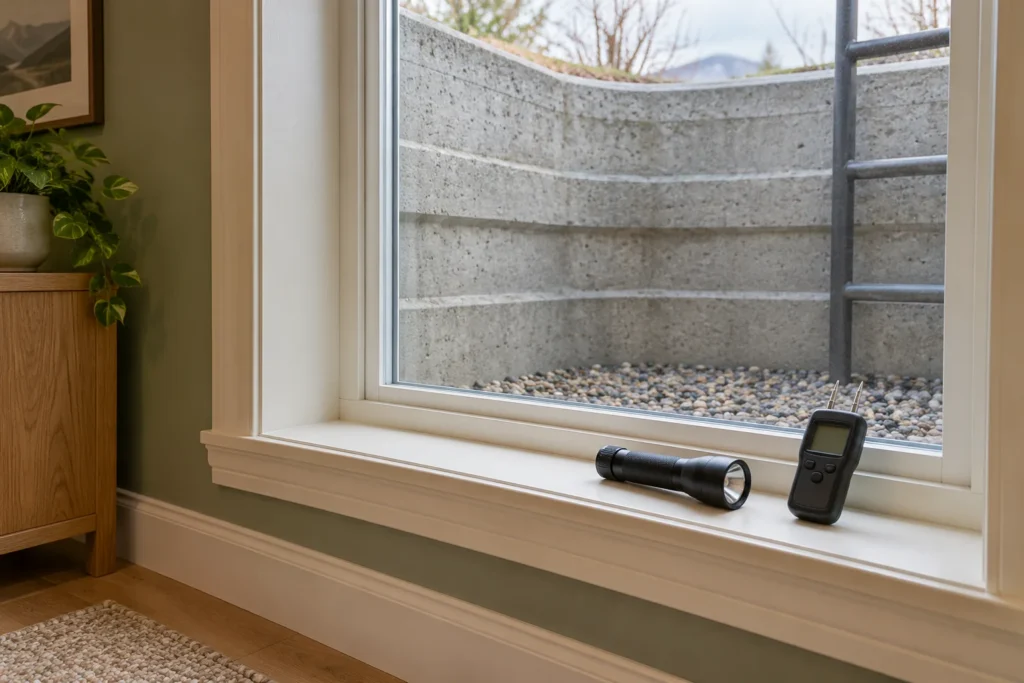
Follow the slope safely
If runoff approaches a window well or foundation, record the route from a safe location. An indoor moisture assessment checks the material; the terrain alone does not diagnose mold.
Use local water information
Cottonwood Heights links to current Big and Little Cottonwood Creek levels and drainage guidance. These resources provide context for an event, not a test of the air inside your home.
Follow the repair question
Tell us whether the inspection is for a purchase, an unresolved leak or a follow-up after work. The report should address that building decision.
More detail for your visit
Know When Your Home Needs Inspection
Provide relevant observations and safe access; a checklist item is not a diagnosis.
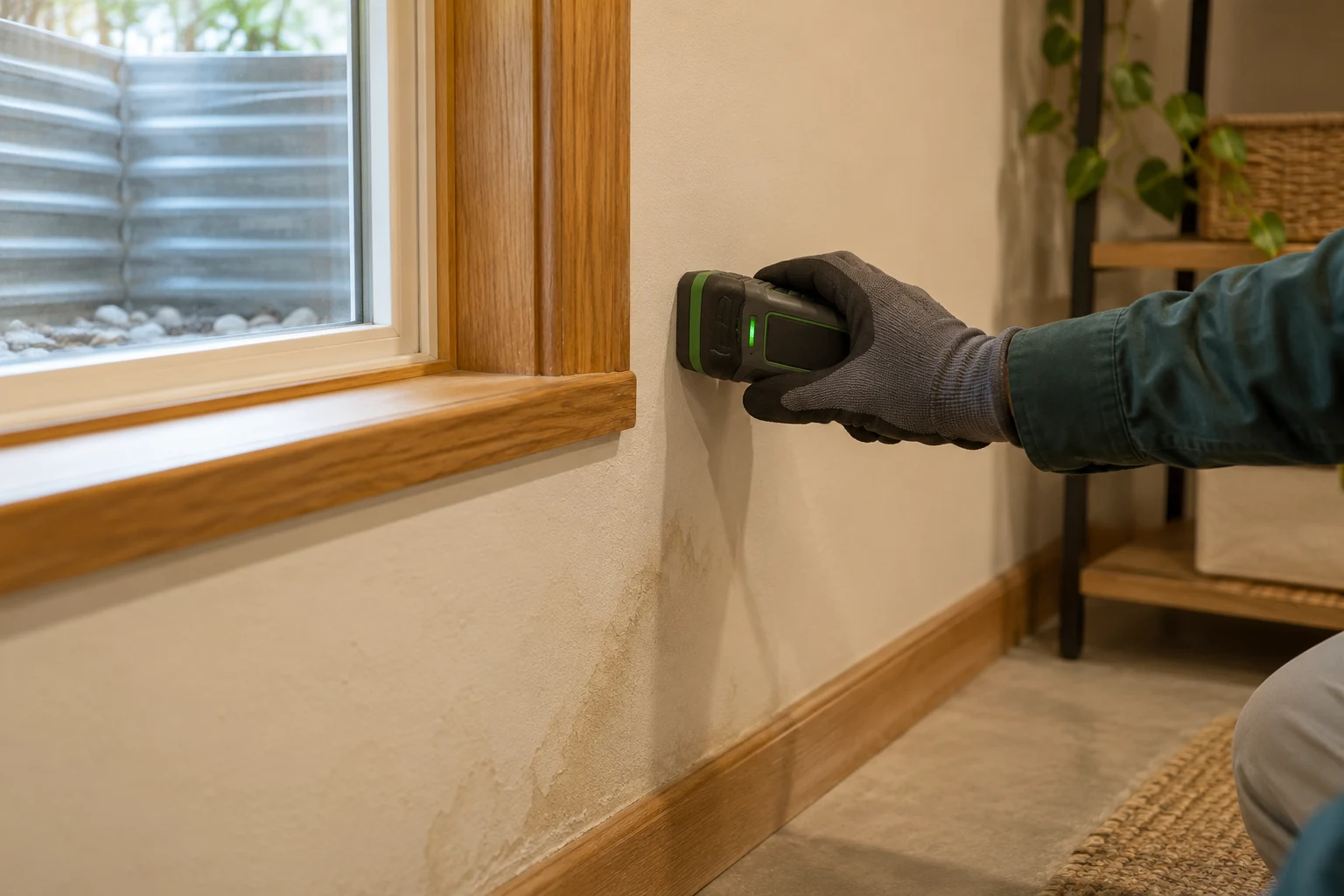
Odor after wet weather
A musty basement smell that changes after rain, melt or watering.
Damp carpet edge
Carpet that feels cool or damp along the uphill foundation wall of a split-level.
Window-well staining
Water stains or peeling paint around basement window wells after heavy snowmelt.
Soft utility-room finishes
Swollen baseboards or soft drywall near the furnace, water heater or laundry hookups.
Closet spotting
Dark spotting inside closets that sit against exterior foundation walls.
Earlier plumbing leak
An old water heater or supply line leak that was dried without opening the wall.
Window condensation
Condensation on windows and cold walls during long inversion stretches with the house shut.
Purchase water history
A purchase or sale involving a finished lower level with an unresolved water-history question.
Why the service matters
Get Answers About Your Mold Concern
An inspection is useful when it helps you choose the next step. Understand the moisture clues, whether a sample would add value and what the written findings do—and do not—show.
Understand the Moisture and Mold Findings
A focused look at accessible areas, water history and useful readings can help explain what needs further attention. A basement odor, later finish and radon question need clearly defined scopes. Ask what the mold inspection covers and what requires a separate service.
Avoid Paying for Tests You Don’t Need
The visual inspection is free. Lab sampling has a separate price and should answer a question that matters to your next decision. Ask how basement odors, hidden repairs and separate tests affect the recommendation for this property.
Get Written Findings You Can Use
Review observations, readings, limits and any lab results together when planning repairs or discussing a property purchase. Keep the explanation with the records for this home so the next decision does not depend on memory.
Why choose Green Home Air
Get Mold Answers From Certified Technicians
Trace the levels and note water after runoff. We can discuss the next step even if you do not have complete records.
Have Certified Technicians Check Your Home
Our certified, insured and vetted technicians work as a uniformed team. You can ask who is coming and how the home will be protected. Mention basement odors, hidden repairs and separate tests when arranging access.
Avoid Tests That Won’t Help You
We explain why samples may help and what they cost before collection. A visit that does not show a need for sampling or removal can still give you a useful next step. Use the details about basement odors, hidden repairs and separate tests to ask why each part of the proposed work is needed.
Get Findings You Can Share and Use
Read the findings, limitations and any lab results together. You can share the record when choosing your next repair or property decision.
Testimonials
What Our Customers Say
Don't just take our word for it. See what Utah homeowners say about Green Home Air.

Before the visit
Prepare for Your Cottonwood Heights Inspection
You do not need complete records to ask for help. For this visit, note basement odors, hidden repairs and separate tests. Start with what you know, then discuss the visit, its limits and the proposed price.
Local context and work detail
Know What the Inspection Checks
For a Cottonwood Heights lower-level concern, show the exact wall, window well or room where the smell or stain appears. Accessible plumbing and utility areas may also help explain the route water could take. A sloped yard is context rather than proof that the wall is wet.
Thermal imaging shows temperature differences; moisture measurements and observations help assess the pattern. An inaccessible cavity remains unexamined unless additional access is specifically agreed.
When a sample adds useful information
Visible mold often does not need species identification before moisture correction and cleanup. Where the source is uncertain or a documentation question remains, ask what a sample would change.
The outside laboratory analyzes the sample collected. The written report connects that result to locations, site findings and limitations; it is not a medical diagnosis or a federal pass/fail certificate.
A scoped visit
Match Findings to the Next Step
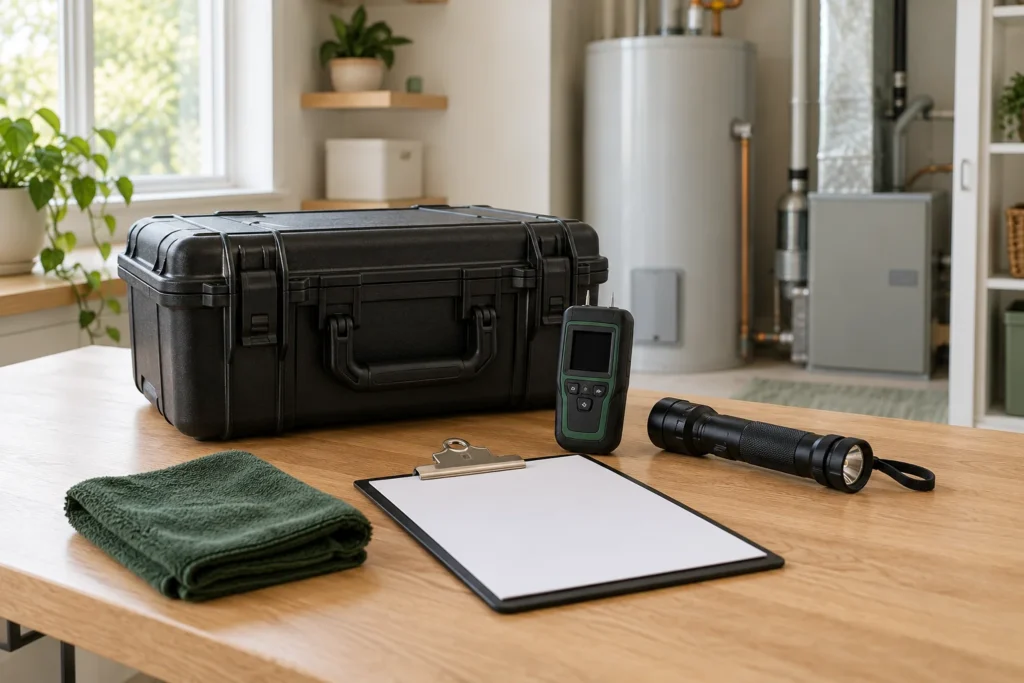
Set the property scope
Identify the lower-level rooms, exterior-wall concerns and accessible utility spaces.
Confirm moisture clues
Temperature patterns and meter readings are interpreted together with the visual assessment.
Explain the findings
You receive a report that distinguishes what was observed from what remains concealed or uncertain.
Local context and work detail
Share Repairs Hidden by Later Finishes
Earlier plumbing work, a basement finish or an addition can change which areas are accessible. Bring available records and identify what you know, rather than assuming all homes in the city have the same age or materials.
A slow leak may leave a changing mark or intermittent odor. A dated photograph can preserve the observation even if the surface looks dry on the appointment day.
Plan access throughout the property
Give us the street address when you call, including the postal city if it differs. We confirm coverage and discuss the particular rooms and utility spaces involved.
Clear a safe route to the water heater, furnace area and the specific exterior-wall surfaces you want checked. Note whether the symptom follows watering, a storm, heating or cooling operation.
Choose the right next step
Get Clear Written Findings


Free visual inspection
- Find the evidence
- A visible patch, moisture reading and source history can sometimes answer the immediate cleanup question.
- No automatic samples
- We explain when visible mold makes laboratory identification unnecessary for the next step.
Lab testing when justified
- An uncertain area
- A musty smell without an obvious source may prompt a more targeted discussion of sampling.
- A written explanation
- Results come with building observations and limitations, not a promise that sampling diagnoses symptoms.
More detail for your visit
Ask About Radon as a Separate Service
A mold and moisture inspection does not include radon testing. Radon needs its own appropriate test and a separate qualified resource.
Before we arrive
Make Your Inspection Visit Count
Show the uphill side
If relevant, identify drainage or window-well concerns before the visit.
Make wall access safe
Move stored items away from the particular surfaces you want checked.
Bring the right question
Tell us whether you need a repair decision, purchase documentation or a follow-up after earlier work.
Questions before you book
Your Questions Answered
Prices and What Is Included
What affects the cost of mold testing in Cottonwood Heights?
The visual inspection is free. Cost comes in only when lab samples make sense, and it depends on how many are needed and where. A single musty basement room might need one or two. A large split-level with several finished areas, or a review before a sale, may need more.
We explain what we would sample and why before taking anything.
Choosing a Time to Book
When is the best time of year for a mold inspection in Cottonwood Heights?
Arrange assessment when a concern appears, before a purchase deadline or before new finishes cover the area you want checked. If the symptom follows rain, melt, watering or HVAC operation, note that timing. The camera and meters assess conditions at the visit; no calendar month guarantees a better mold result.
Written Reports and Repair Records
Can an inspection report help with a Utah insurance claim or home sale?
A written report gives you a clear record of what was found, where it was and what likely caused it. Cottonwood Heights homeowners can share it with an insurance agent or include it with sale paperwork. Whether a policy covers the problem depends on the policy and the cause, so ask your agent directly.
We do not give legal or coverage advice.
Do You Cover My Street Address?
My Cottonwood Heights address says Midvale or Sandy. Do you still cover it?
Tell us the street address and postal city when you call, and we confirm coverage. A mailing label does not determine the condition or the inspection method. We serve Cottonwood Heights homes and discuss the actual room, water history and access before scheduling.
Other Tests and Inspection Limits
Do you test for radon during a mold inspection in Cottonwood Heights?
No. This inspection covers mold and moisture; radon requires its own appropriate test through a separate qualified resource. Let us know the moisture or musty-basement question you want this visit to answer so you do not book the wrong service.
Older Homes and Later Changes
Should I get a mold inspection before buying a 1970s home in Cottonwood Heights?
A finished basement, earlier leak or unresolved stain can merit a closer assessment during the purchase period. Being built in the 1970s does not by itself establish a need for testing. We assess accessible moisture evidence and explain any lab recommendation. Concealed material we could not assess remains a limitation.
Musty Smells and Air-Cleaning Limits
Does a musty smell in my Cottonwood Heights basement always mean mold?
No. Stored material, drains and damp surfaces can have odors without establishing mold. Tell us the room and when the smell is strongest. We investigate accessible conditions and relevant measurements, then explain what was found or remains uncertain. A dry reading alone does not certify every hidden cavity.
What Happens After a Doctor’s Referral?
My doctor suggested checking my Cottonwood Heights home for mold. What happens next?
You're welcome to contact us with your doctor's recommendation. Physicians refer patients to Green Home Air for building assessment. Tell us the rooms, water history and any specific environmental question so we can plan the inspection and discuss useful sampling. You receive written findings and any laboratory results to share with your clinician. We document the building; we do not diagnose symptoms or set a person's safe exposure level.
Find the right next step
More Services for Your Home
Mold Removal & Remediation In Cottonwood Heights
See how assessment, affected materials, containment and drying shape the work.
Explore this service
Whole Home Air Purification In Cottonwood Heights
Compare filtration and coil UV-C, with equipment fit and maintenance explained.
Explore this service
Air Duct Cleaning In Cottonwood Heights
Compare whole-system cleaning, access needs and when a visit makes sense.
Explore this serviceExplore service information by city
 Salt Lake CityMold Inspection & Testing In Salt Lake City
 West Valley CityMold Inspection & Testing In West Valley City
 West JordanMold Inspection & Testing In West Jordan
 ProvoMold Inspection & Testing In Provo
 SandyMold Inspection & Testing In Sandy
 South JordanMold Inspection & Testing In South Jordan
 St. GeorgeMold Inspection & Testing In St. George
 LehiMold Inspection & Testing In Lehi
 MurrayMold Inspection & Testing In Murray
 MillcreekMold Inspection & Testing In Millcreek
 HolladayMold Inspection & Testing In Holladay
Local photo credits
- Cindi & Jason · Photo source · CC BY 2.0. Resized and cropped.
- Joseph Young duffuff · Photo source · CC0. Resized and cropped.
- Famartin · Photo source · CC BY-SA 4.0. Resized and cropped.
- JacquesDemien · Photo source · CC0. Resized and cropped.
- Supercarwaar · Photo source · CC BY-SA 4.0. Resized and cropped.
- formulanone · Photo source · CC BY-SA 2.0. Resized and cropped.
- Tricia Simpson · Photo source · CC BY-SA 3.0. Resized and cropped.
- Scott Catron from Sandy, Utah, USA · Photo source · CC BY-SA 2.0. Resized and cropped.
- Skykingcarter · Photo source · CC BY-SA 4.0. Resized and cropped.
- Stan Shebs · Photo source · CC BY-SA 3.0. Resized and cropped.
- OrangeJedi · Photo source · CC BY-SA 4.0. Resized and cropped.
- Jere Keys · Photo source · CC BY 2.0. Resized and cropped.
- MD.millcreekut · Photo source · CC0. Resized and cropped.
- Derrellwilliams · Photo source · CC BY-SA 4.0. Resized and cropped.


Get In Touch
Get a Free Estimate
Schedule your free mold inspection today. Our team is standing by to help protect your home and family.
24/7 Emergency Line
Email Us
Service Area
Cottonwood Heights & Surrounding Areas
Business Hours
Mon-Sat 8am-7pm | 24/7 Emergency
Fill out the form and our team will reach out to you promptly.