
Get a free estimate
Free visual inspection. Optional lab testing costs extra.
We use your details to respond to your service request. Privacy Policy
Provo Mold Inspection & Testing
What Should the Inspection Help Decide?
More detail for your visit
Condensation or Water Coming In?
These are examples to investigate in a Provo unit, rather than diagnoses assigned by season.
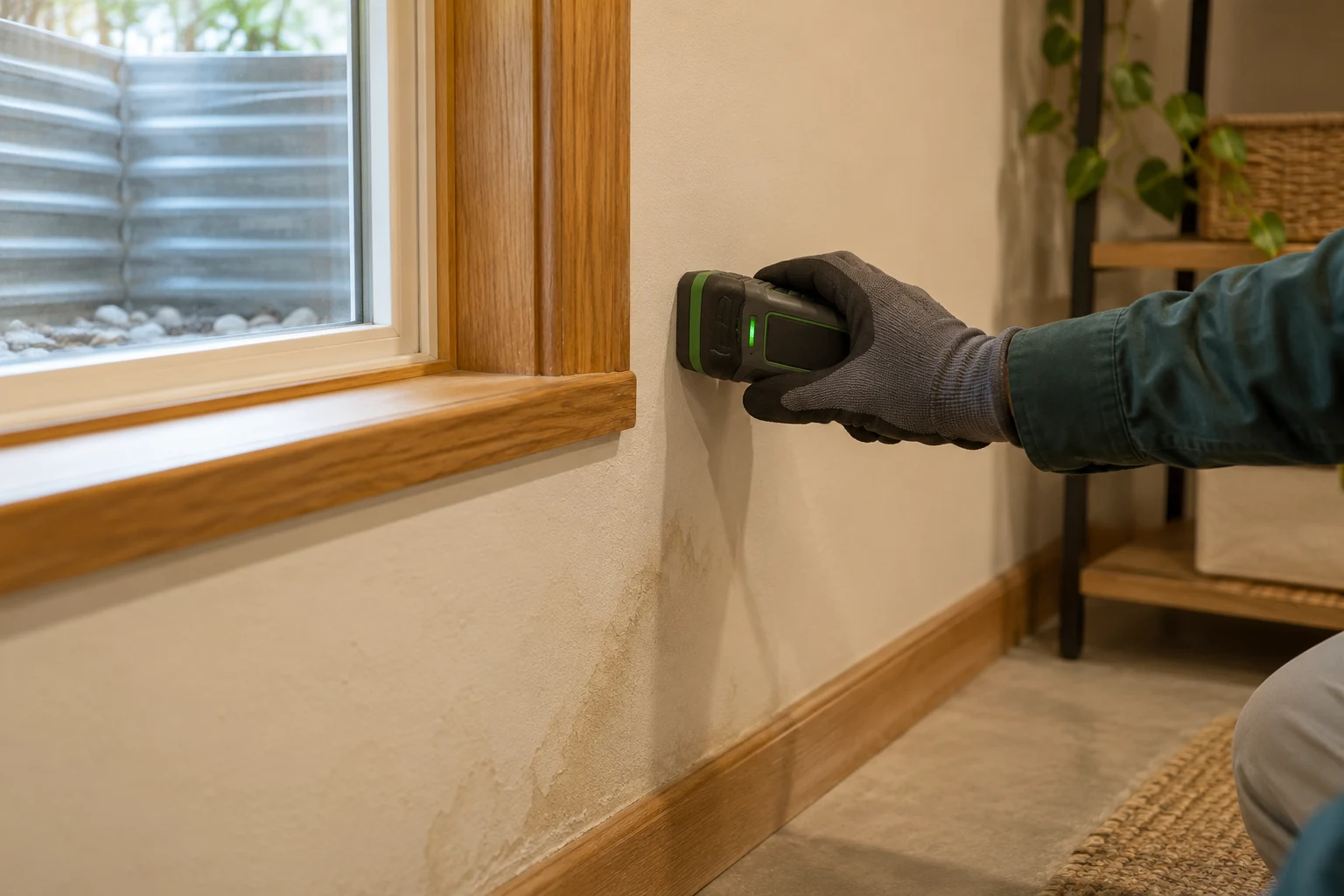
A cold-surface symptom
- What to report
- The surface, room and conditions when condensation appears.
- What to check
- Accessible material, ventilation context and relevant moisture measurements.
- What remains uncertain
- A temperature pattern alone does not identify mold or a concealed water route.
An entry-point symptom
- What to report
- The actual window well, lower doorway or plumbing route related to water.
- What to check
- Accessible material and the repair history at the affected location.
- What remains uncertain
- A city flood map does not establish whether indoor materials are currently affected.
Start with the evidence
Keep Clear Records in Occupied Homes
For a Provo buyer, renter or owner, the useful outcome is a clear record of the building conditions. We assess moisture and accessible growth, then explain whether laboratory testing would add information.
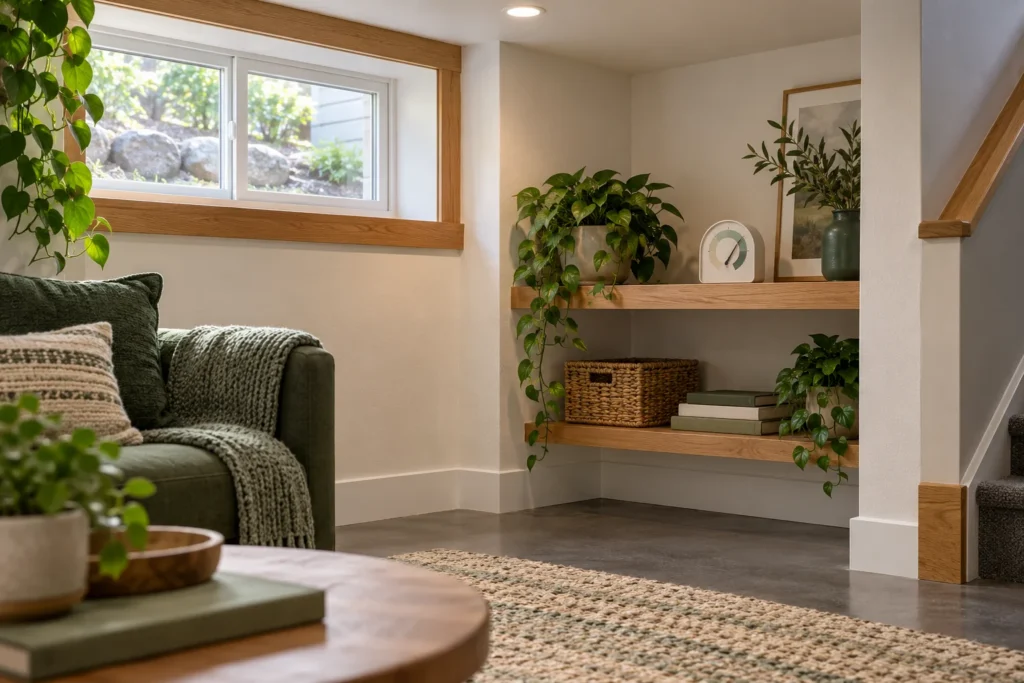
Document the actual room
A basement unit, attic conversion and main-floor bedroom may have different moisture sources. Mark where an odor or stain appears rather than asking a single sample to explain the whole property.
Keep the map separate
Provo’s updated FEMA flood maps took effect in June 2026. An address lookup can inform a drainage or insurance conversation; it cannot establish whether a home currently contains mold.
Plan occupied access
If other people occupy part of the house, arrange permission and access before the visit. Unchecked rooms should be identified as limitations in the report.
Why the service matters
Get Answers About Your Mold Concern
An inspection is useful when it helps you choose the next step. Understand the moisture clues, whether a sample would add value and what the written findings do—and do not—show.
Understand the Moisture and Mold Findings
A focused look at accessible areas, water history and useful readings can help explain what needs further attention. Rental rooms, added units and attic spaces can complicate access. Identify who can authorize entry and describe when condensation or water entry was noticed.
Avoid Paying for Tests You Don’t Need
The visual inspection is free. Lab sampling has a separate price and should answer a question that matters to your next decision. Ask how occupied units, attic rooms and owner approval affect the recommendation for this property.
Get Written Findings You Can Use
Review observations, readings, limits and any lab results together when planning repairs or discussing a property purchase. Keep the explanation with the records for this home so the next decision does not depend on memory.
Why choose Green Home Air
Get Mold Answers From Certified Technicians
Arrange access and share any move-out deadline. We can discuss the next step even if you do not have complete records.
Have Certified Technicians Check Your Home
Our certified, insured and vetted technicians work as a uniformed team. You can ask who is coming and how the home will be protected. Mention occupied units, attic rooms and owner approval when arranging access.
Avoid Tests That Won’t Help You
We explain why samples may help and what they cost before collection. A visit that does not show a need for sampling or removal can still give you a useful next step. Use the details about occupied units, attic rooms and owner approval to ask why each part of the proposed work is needed.
Get Findings You Can Share and Use
Read the findings, limitations and any lab results together. You can share the record when choosing your next repair or property decision.
Testimonials
What Our Customers Say
Don't just take our word for it. See what Utah homeowners say about Green Home Air.

Before the visit
Prepare for Your Provo Inspection
You do not need complete records to ask for help. For this visit, note occupied units, attic rooms and owner approval. Start with what you know, then discuss the visit, its limits and the proposed price.
Local context and work detail
Record Findings in an Occupied Property
For a Provo rental, identify each occupied space and arrange access before the appointment. A basement apartment or attic conversion should have its observations labeled separately, rather than combining every finding into one description of the house.
A move-in or move-out inspection records conditions on that date. It cannot determine who caused a problem or settle a deposit dispute simply from a stain or laboratory result.
Look for the actual water route
Plumbing, a window well, roof entry or condensation may warrant different checks. Show us when the symptom appears and what has changed, including repairs, painting or ventilation. We do not assume that proximity to Utah Lake establishes a damp basement.
Moisture readings and accessible observations guide the investigation. A thermal pattern can suggest an area to check, while an untested concealed space remains a stated limitation.
More detail for your visit
Plan Your Provo Inspection Next Step
Use the condition and the decision ahead of you, rather than a fixed service calendar.
A room changes during heating
If an occupied attic room develops condensation or an odor, identify the exact surface and operating conditions. We assess the accessible evidence rather than assuming the entire house is affected.
Water reaches the lower level
Record the window well, doorway or wall involved and arrange attention to the source promptly. The condition should not wait for a later seasonal inspection.
Cooling or smoke changes household operation
Describe any drain-related moisture or changes in window use. Current outdoor air-quality guidance and a building moisture assessment answer different questions.
A tenant or buyer deadline approaches
Arrange owner and occupant permission early. Allow any agreed laboratory turnaround and keep findings labeled by the actual unit or room.
Local context and work detail
Check Added Units and Attic Rooms

A kitchen or bathroom in a converted space may raise questions about plumbing, exhaust routing and roof conditions. We assess accessible surfaces and relevant moisture evidence within the scope agreed with the owner or occupant.
Separate labels for rooms, units and any samples make the findings easier to act on. Shared or inaccessible areas are identified so a manager can arrange the next step.
Before purchasing an older Provo home
Ask about earlier water entry, later basement finishes and changes to plumbing. An inspection can add a written assessment of accessible basement, crawlspace, attic or bathroom concerns during your purchase window.
Bring the contract deadline when scheduling, since any lab turnaround must fit that decision.
Before we arrive
Match Findings to the Next Step
List occupied areas
Tell us about separate units or converted rooms before scheduling.
Save earlier evidence
Keep dated leak photos and previous inspection or repair paperwork.
Avoid a staged test
Explain recent cleaning, open windows or painting rather than trying to manufacture particular sampling conditions.
Choose the right next step
Make Your Inspection Visit Count
What the visit establishes
- Visible and measured
- We describe accessible conditions and moisture evidence in the rooms included.
- What remains hidden
- A finished cavity that was not opened stays a stated limitation, not a promise that nothing exists behind it.
What samples establish
- A selected location
- Lab results describe the sample taken under the recorded conditions.
- A practical next step
- We interpret the result alongside the visit rather than presenting it as a health diagnosis or universal safe number.
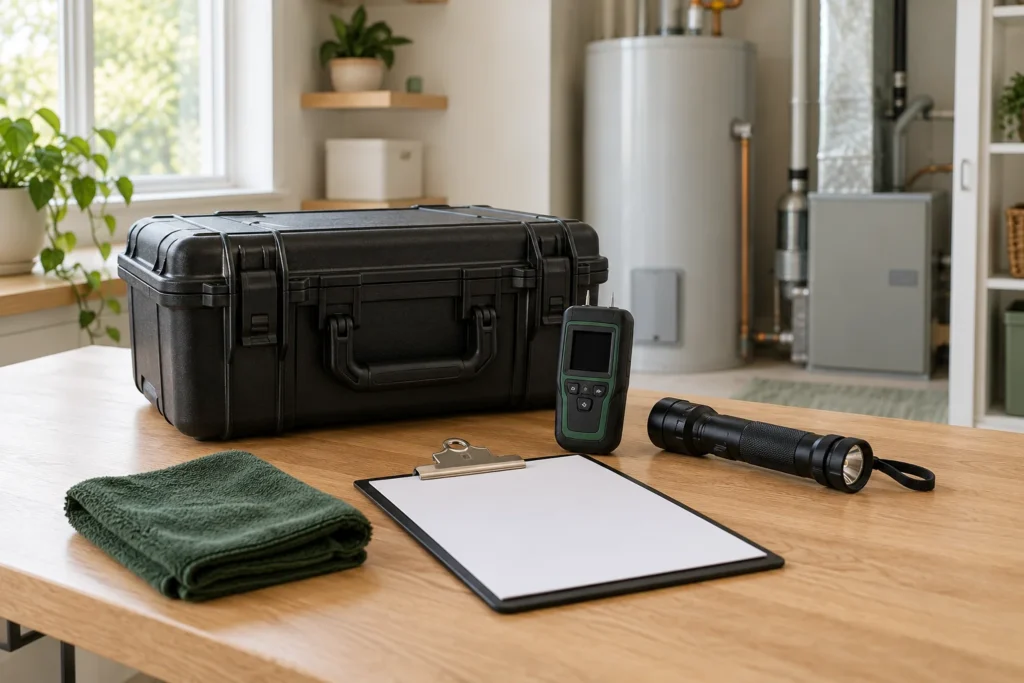
A scoped visit
Get Clear Written Findings
Agree who attends
Coordinate owner, occupant or buyer access and identify the question the report should address.
Inspect the relevant spaces
We use the water history and current observations to guide measurements and any proposed sampling.
Make the record usable
You receive a written explanation that can accompany a repair or transaction discussion.
Questions before you book
Your Questions Answered
Mold Findings and Your Next Step
We're doing a move-out on a BYU-area rental. What does mold testing add?
It provides a dated record of the agreed areas, with photos, readings and any relevant lab results. That can support a landlord-and-tenant discussion, but it cannot establish that a condition predates a tenancy or determine a deposit decision on its own. Visible growth or an odor does not automatically require sampling; we explain whether it would add information.
Rental Questions and Getting Help
What's the difference between air sampling and surface testing in a rental unit?
A surface sample describes the material collected from a selected spot. An air sample describes airborne material captured under the collection conditions. Either may help a defined question, but neither establishes the full extent of hidden growth or a household health risk. We explain the plan and interpret any results with the unit’s accessible observations.
Prices and What Is Included
What affects the cost of a mold inspection in Provo?
Mainly the size of the home, how many separate living areas it has, and how many samples are needed. A Provo house with a basement apartment or an attic unit takes longer because we inspect each space as its own zone. Older homes east of downtown may also have crawlspaces or unfinished areas that need extra time.
We only take samples when they'll answer a specific question.
Choosing a Time to Book
When is the best time of year to test for mold in a Provo home?
Late spring is a good time if you're worried about the basement, since snowmelt problems show up then. Winter is better for attics and attic apartments, because that's when warm indoor air condenses on cold roof framing. If you smell something musty or see staining, don't wait for a season. Call when you notice it.
Written Reports and Repair Records
Does a mold inspection report help with insurance or a home sale in Utah?
It can. A written report documents what was found and where, which is useful when talking with an insurer or during a sale. Keep in mind that many policies cover sudden water damage but limit coverage for long-term leaks and mold, so check your own policy.
For questions about disclosure in a sale, talk with your real estate agent or attorney.
Older Homes and Later Changes
Should I get a mold inspection before buying a historic home in Provo?
Consider an assessment if the property has a water history, a musty space or an unresolved stain. Bring information about later basement finishes and repairs rather than relying on an assumed construction date. Moisture measurements and thermal patterns can guide accessible checks; they do not certify the condition of every finished cavity.
Access and Separate Air Systems
Can you test an attic apartment separately from the rest of a Provo house?
Yes, with the appropriate permission and access. We can label observations and any sample locations by the attic unit, basement unit or main floor so the record is understandable. Agree which spaces and shared systems are included. A room we could not enter remains an explicit limitation.
Water Routes Near Your Home
Is it worth testing a Provo home after a high-runoff spring?
Signs of moisture after a storm or runoff event merit attention. Show us the actual wall, window well or lower entry involved and describe what was dried or repaired. Provo’s current flood-map resource offers address-specific context; it does not establish mold inside a home. Samples are proposed only if they add useful information.
Find the right next step
More Services for Your Home
Mold Removal & Remediation In Provo
See how assessment, affected materials, containment and drying shape the work.
Explore this service
Whole Home Air Purification In Provo
Compare filtration and coil UV-C, with equipment fit and maintenance explained.
Explore this service
Air Duct Cleaning In Provo
Compare whole-system cleaning, access needs and when a visit makes sense.
Explore this serviceExplore service information by city
 Salt Lake CityMold Inspection & Testing In Salt Lake City
 West Valley CityMold Inspection & Testing In West Valley City
 West JordanMold Inspection & Testing In West Jordan
 SandyMold Inspection & Testing In Sandy
 South JordanMold Inspection & Testing In South Jordan
 St. GeorgeMold Inspection & Testing In St. George
 LehiMold Inspection & Testing In Lehi
 MurrayMold Inspection & Testing In Murray
 MillcreekMold Inspection & Testing In Millcreek
 HolladayMold Inspection & Testing In Holladay
 Cottonwood HeightsMold Inspection & Testing In Cottonwood Heights
Local photo credits
- Creator: Javin Weaver · Photo source · CC BY-SA 3.0. Resized and cropped.
- An Errant Knight · Photo source · CC BY-SA 4.0. Resized and cropped.
- An Errant Knight · Photo source · CC BY-SA 4.0. Resized and cropped.
- JacquesDemien · Photo source · CC0. Resized and cropped.
- Supercarwaar · Photo source · CC BY-SA 4.0. Resized and cropped.
- formulanone · Photo source · CC BY-SA 2.0. Resized and cropped.
- Scott Catron from Sandy, Utah, USA · Photo source · CC BY-SA 2.0. Resized and cropped.
- Skykingcarter · Photo source · CC BY-SA 4.0. Resized and cropped.
- Stan Shebs · Photo source · CC BY-SA 3.0. Resized and cropped.
- OrangeJedi · Photo source · CC BY-SA 4.0. Resized and cropped.
- Jere Keys · Photo source · CC BY 2.0. Resized and cropped.
- MD.millcreekut · Photo source · CC0. Resized and cropped.
- Derrellwilliams · Photo source · CC BY-SA 4.0. Resized and cropped.
- User:JerAnderson · Photo source · Public domain. Resized and cropped.


Get In Touch
Get a Free Estimate
Schedule your free mold inspection today. Our team is standing by to help protect your home and family.
24/7 Emergency Line
Email Us
Service Area
Provo & Surrounding Areas
Business Hours
Mon-Sat 8am-7pm | 24/7 Emergency
Fill out the form and our team will reach out to you promptly.